
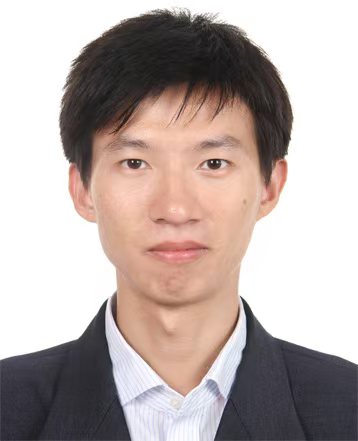
邓磊 教授
学历:博士
职称:教授
所属部门:生物技术系
招生专业:细胞生物学、遗传学
联系电话:0538-8241782
邓磊,山东农业大学生命科学学院教授、博士生导师。国家“万人计划”青年拔尖人才、教育部U40项目获得者、山东省杰出青年科学基金获得者、山东省“泰山学者”青年专家。兼任中国植物生理与植物分子生物学学会植物激素生物学专业委员会秘书长。主持国家自然科学基金“生物育种基础研究青年专项”等国家级科研项目10余项。长期以番茄为模式研究植物防御病虫侵害和果实品质形成的分子机理,并致力于健康、美味、绿色番茄的精准设计育种。以第一或通讯作者(含共同)在Cell、Nature Plants、Developmental Cell、Molecular Plant(3篇)、Plant Cell(3篇)等国际主流学术期刊发表论文14篇。获得授权专利17项。参与育成农业农村部登记番茄品种14个,获植物新品种权2项。
2024.02 - 至今 山东农业大学,教授
2022.01 - 2024.01 中国科学院遗传与发育生物学研究所,副研究员(2022年入选中国科学院特聘研究骨干岗位)
2020.01 - 2021.12 中国科学院遗传与发育生物学研究所,助理研究员
2016.05 - 2019.12 中国科学院遗传与发育生物学研究所,工程师
2013.07 - 2016.04 中国科学院遗传与发育生物学研究所,博士后(合作导师:李传友 研究员)
2007.09 - 2013.06 重庆大学,植物学专业,博士(导师:陈国平 教授)
2003.09 - 2007.06 重庆大学,生物工程专业,本科
教育部中央高校青年教师科研创新能力支持项目 (U40项目)获得者(2025年)
国家“万人计划”青年拔尖人才(2024年)
国家自然科学基金委“生物育种基础研究青年专项”获得者(2024年)
山东省杰出青年科学基金获得者(2024年)
山东省“泰山学者”青年专家(2024年)
山东省自然科学一等奖(2025年,排名3/8)
山东省齐鲁农业科技一等奖(2021年,排名5/12)
研究方向
1. 植物系统性防御与可塑性发育调控机理
2. 番茄优质抗病性状形成机理解析与设计育种
发表论文(#并列第一作者,*通讯作者)
1. Zhou K#, Wu F#, Deng L#,*, Xiao Y, Yang W, Zhao J, Wang Q, Chang Z, Zhai H, Sun C, Han H, Du M, Chen Q, Yan J, Xin P, Chu J, Han Z, Chai J, Howe G, Li, C-B*, and Li C*. (2025). Antagonistic systemin receptors integrate the activation and attenuation of systemic wound signaling in tomato. Developmental Cell 60: 535–550. https://doi.org/10.1016/j.devcel.2024.11.005
Highlighted with a Preview article in Developmental Cell, https://doi.org/10.1016/j.devcel.2025.01.019
Dev. Cell | 山东农业大学李传友团队揭示植物免疫稳态维持新机制,https://mp.weixin.qq.com/s/rOzrq7_Ejm0mQI6JxbTXUQ
2. Wu F#,*, Sun C#, Zhu Z, Deng L, Yu F, Xie Q, and Li C*. (2025). A multiprotein regulatory module, MED16–MBR1&2, controls MED25 homeostasis during jasmonate signaling. Nature Communications 16: 772. https://doi.org/10.1038/s41467-025-56041-3
3. Du M#,*, Sun C#, Deng L, Zhou M, Li J, Du Y, Ye Z, Huang S, Li T, Yu J, Li C-B*, and Li C*. (2025). Molecular Breeding of Tomato: Advances and Challenges. Journal of Integrative Plant Biology 67: 669–721. https://doi.org/10.1111/jipb.13879
4. Zhou M#, Sun C#, Zhou K#, Yuan G, Deng L, Pan B, Hu X, Du M*, Li C*, and Li C-B*. (2025). An optimized haploid breeding strategy employing genome-edited anthocyanin markers for visual selection in tomato. Plant Communications 21: 101570. https://doi.org/10.1016/j.xplc.2025.101570
5. Zhang Z#, Han H#, Zhao J#, Liu Z#, Deng L#, Wu L#, Niu J, Guo Y*, Wang G*, Gou X*, Li C*, Li C*, and Liu C-M*. (2025). Peptide hormones in plants. Molecular Horticulture 5: 7. https://doi.org/10.1186/s43897-024-00134-y
6. Kang Z, Guo X, Song Z, Qu C, Li J, Deng L, Jing S, Liu K, Zhang N, Di N, Guo Y, Li C*, and Sun J*. (2026). Transcription factor SlJIG orchestrates multi-layer defense in tomato against the invasive pest Phthorimaea absoluta. New Phytologist 249: 2025–2040. http://doi.org/10.1111/nph.70797
7. Zhang Y#, Liu J#, Sun H#, Zang Y#, Zhang Y, Wang H, Sun C, Meng X, Deng L, Chen Q*, and Li C*. (2025). The G protein γ subunit SlGGC1 regulates saline-alkali stress response in tomato. Vegetable Research 5: e033. https://doi.org/10.48130/vegres-0025-0027
8. Shan Q#, Zhao D#, Cao B#, Zhu X, Wang C, Deng L, Li C, Zhang Y, Shi Q, and Gong B*. (2025). Jasmonic acid and nitric oxide orchestrate a hierarchical melatonin cascade for Botrytis cinerea resistance in tomato. Plant Physiology 197: kiaf078. https://doi.org/10.1093/plphys/kiaf078
9. Yang W#, Zhai H#, Wu F#, Deng L#,*, Chao Y, Meng X, Chen Q, Liu C, Bie X, Sun C, Yu Y, Zhang X, Zhang X, Chang Z, Xue M, Zhao Y, Meng X, Li B, Zhang X, Zhang D, Zhao X, Gao C, Li J, and Li C*. (2024). Peptide REF1 is a local wound signal promoting plant regeneration. Cell 187: 3024–3038.https://doi.org/10.1016/j.cell.2024.04.040
Highlighted with a Research highlight article in Nature Plants, https://doi.org/10.1038/s41477-024-01752-6;
Highlighted with a Dispatches article in Current Biology, https://doi.org/10.1016/j.cub.2024.07.008;
Highlighted with a Research highlight article in Cell Research, https://doi.org/10.1038/s41422-024-01035-x;
Highlighted with a Spotlight article in Molecular Plant, https://doi.org/10.1016/j.molp.2024.07.012
专家点评 Cell | 破解世纪难题——李传友团队首次发现再生因子调控植物组织修复和器官再生,https://mp.weixin.qq.com/s/yc8b5GRtIb-46Xg-FuASDQ
10. Yang T#, Deng L#,*, Wang Q, Sun C, Ali M, Wu F, Zhai H, Xu Q, Xin P, Cheng S, Chu J, Huang T, Li C-B, and Li C*. (2024). Tomato CYP94C1 inactivates bioactive JA-Ile to attenuate jasmonate-mediated defense during fruit ripening. Molecular Plant17: 509–512. https://doi.org/10.1016/j.molp.2024.02.004
中科院遗传发育所/山东农大李传友团队揭示果实成熟更易腐烂的分子机理并提出打破番茄优质与高抗负相关新策略,https://mp.weixin.qq.com/s/1w7aZWmPSJfLD8DJfEfeFg
11. Han H, Li X, Li T, Chen Q, Zhao J, Zhai H, Deng L, Meng X*, and Li C*. (2024). Chromosome-level genome assembly of Solanum pimpinellifolium. Scientific Data11: 577. https://doi.org/10.1038/s41597-024-03442-6
山东农业大学李传友团队解析醋栗番茄基因组,https://mp.weixin.qq.com/s/nZARUtPT1jTVnPPgpSrQdw
12. Zhu Q#, Deng L#, Chen J#, Rodriguez GR, Sun C, Chang Z, Yang T, Zhai H, Jiang H, Topcu Y, Francis D, Hutton S, Sun L, Li C-B, van der Knaap E, and Li C*. (2023). Redesigning the tomato fruit shape for mechanized production. Nature Plants9:1659–1674. https://doi.org/ 10.1038/s41477-023-01522-w
Highlighted with a News article in Science, https://doi.org/10.1126/science.adk9188
Recommended in F1000 Prime, https://archive.connect.h1.co/article/742783436/
13. Deng L#,*, Yang T#, Li Q#, Chang Z#, Sun C, Jiang H, Meng X, Huang T, Li C-B, Zhong S, and Li C*. (2023). Tomato MED25 regulates fruit ripening by interacting with EIN3-like transcription factors. Plant Cell 35: 1038–1057. https://doi.org/10.1093/plcell/koac349
Highlighted with an In Brief article in Plant Cell, https://doi.org/10.1093/plcell/koad015
中科院遗传发育所李传友研究组揭示番茄果实成熟调控新机理,https://mp.weixin.qq.com/s/Z0fqI2o3daODidIAbpL60g
14. Yang T#, Ali M#, Lin L#, Li P, He H, Zhu Q, Sun C, Wu N, Zhang X., Huang T, Li C-B, Li C*, and Deng L*. (2023). Recoloring tomato fruit by CRISPR/Cas9-mediated multiplex gene editing. Horticulture Research10: uhac214. (Cover story) https://doi.org/10.1093/hr/uhac214
中科院遗传发育所李传友课题组通过多重基因编辑实现番茄多种果色的快速同步定制,https://mp.weixin.qq.com/s/QKNDQI3WA5VAaPPg1QZd2A
15. Zhou M, Deng L, Yuan G, Zhao W, Ma M, Sun C, Du M*, Li C*, and Li C-B*. (2023). Rapid generation of a tomato male sterility system and its feasible application in hybrid seed production. Theoretical and Applied Genetics136:197. https://doi.org/10.1007/s00122-023-04428-5
16. Zhou M, Deng L, Yuan G, Zhao W, Ma M, Sun C, Du M, Li C, and Li C-B*. (2023). A CRISPR-Cas9-derived male sterility system for tomato breeding. Agronomy 13: 1785. https://doi.org/10.3390/agronomy13071785
17. An C#, Deng L#, Zhai H#, You Y, Wu F, Zhai Q, Goossens A, and Li C*. (2022). Regulation of jasmonate signaling by reversible acetylation of TOPLESS in Arabidopsis. Molecular Plant15: 1329–1346.https://doi.org/10.1016/j.molp.2022.06.014
Highlighted with a Spotlights article in Molecular Plant, https://doi.org/10.1016/j.molp.2022.07.015
李传友研究组发现转录共抑制子TOPLESS通过可逆乙酰化修饰调控茉莉酸信号通路,https://mp.weixin.qq.com/s/HuoKcu40AaFnjupqcsQmyA
18. Lin L, Du M, Li S, Sun C, Wu F, Deng L, Chen Q*, and Li C*. (2022). Mediator complex subunit MED25 physically interacts with DST to regulate spikelet number in rice.Journal of Integrative Plant Biology64: 871–883. https://doi.org/10.1111/jipb.13238
19. Zhou M, Deng L, Guo S, Yuan G, Li C*, and Li C-B*. (2022). Alternative transcription and feedback regulation suggest that SlIDI1 is involved in tomato carotenoid synthesis in a complex way. Horticulture Research9: uhab045. (Cover story) https://doi.org/10.1093/hr/uhab045
20. Zhai Q, Deng L, and Li C*. (2020). Mediator subunit MED25: at the nexus of jasmonate signaling.Current Opinion in Plant Biology57: 78–86. https://doi.org/10.1016/j.pbi.2020.06.006
Curr Opin Plant Biol | 李传友研究组应邀撰写茉莉酸信号通路转录调控机理的综述文章,https://mp.weixin.qq.com/s/EoLr2HDCllWA7TtDQ02XeA
21. Wu F#, Deng L#, Zhai Q, Zhao J, Chen Q, and Li C*. (2020). Mediator subunit MED25 couples alternative splicing of JAZ genes with fine-tuning of jasmonate signaling. Plant Cell32: 429–448. https://doi.org/10.1105/tpc.19.00583
遗传所李传友组揭示可变剪切调控茉莉酸信号通路的机制,https://mp.weixin.qq.com/s/nKNFc8ZE99LVfe-Ii58DQA
22. Du M#,*, Zhou K#, Liu Y#, Deng L#, Zhang X, Lin L, Zhou M, Zhao W, Wen C, Xing J, Li C-B*, and Li C*. (2020). A biotechnology-based male-sterility system for hybrid seed production in tomato. Plant Journal102: 1090–1100. https://doi.org/10.1111/tpj.14678
李传友研究组合作研发新型番茄雄性不育系统用于杂交种子生产,https://mp.weixin.qq.com/s/KfW2m5ByBYqiiBwUWiPGzw
23. Sun C#, Deng L#, Du M, Zhao J, Chen Q, Huang T, Jiang H, Li C-B*, and Li C*.(2020). A transcriptional network promotes anthocyanin biosynthesis in tomato flesh. Molecular Plant13:42–58. (Cover story). https://doi.org/10.1016/j.molp.2019.10.010
Highlighted with a Spotlights article in Molecular Plant, https://doi.org/10.1016/j.molp.2019.12.012
中科院遗传所李传友研究组在番茄花青素合成的转录调控机理研究中取得重要进展,https://mp.weixin.qq.com/s/sty4h0umk23F-K3THH9aMA
24. Sun W#, Han H#, Deng L, Sun C, Xu Y, Lin L, Ren P, Zhao J, Zhai Q*, and Li C. (2020). Mediator subunit MED25 physically interacts with PHYTOCHROME INTERACTING FACTOR4 to regulate shade-induced hypocotyl elongation in tomato. Plant Physiology184:1549–1562. https://doi.org/10.1104/pp.20.00587
Highlighted with a News and Views article in Plant Physiology, https://doi.org/10.1104/pp.20.01324
25. Meng X#, Cai, J#, Deng L, Li G, Sun J, Han Y, Dong T, Liu Y, Xu T, Liu S, Li Z, and Zhu M*. (2020). SlSTE1 promotes abscisic acid-dependent salt stress-responsive pathways via improving ion homeostasis and reactive oxygen species scavenging in tomato. Journal of Integrative Plant Biology62: 1942–1966. https://doi.org/10.1111/jipb.12987
26. Yang T, Deng L, Zhao W, Zhang R, Jiang H, Ye Z*, Li C-B*, andLi C*. (2019). Rapid breeding of pink-fruited tomato hybrids using the CRISPR/Cas9 system. Journal of Genetics and Genomics 46: 505–508. (Cover story) https://doi.org/10.1016/j.jgg.2019.10.002
27. Liu Y#, Du M#, Deng L#, Shen J, Fang M, Chen Q, Lu Y, Wang Q*, Li C*, and Zhai Q*. (2019). MYC2 regulates the termination of jasmonate signaling via an autoregulatory negative feedback loop. Plant Cell31: 106–127.https://doi.org/10.1038/s41477-019-0441-9
Highlighted with an In Brief article in Plant Cell, https://doi.org/10.1105/tpc.19.00004
Highlighted with a Spotlight article in Trends in Plant Science, https://doi.org/10.1016/j.tplants.2019.06.001
Recommended in F1000 Prime, https://connect.h1.co/article/734767302
28. Deng L, Wang H, Sun C, Li Q, Jiang H, Du M, Li C-B, and Li C*.(2018). Efficient generation of pink-fruited tomatoes using CRISPR/Cas9 system. Journal of Genetics and Genomics45:51–54. https://doi.org/10.1016/j.jgg.2017.10.002
29. An C#, Li L#, Zhai Q#,*, You Y, Deng L, Wu F, Chen R, Jiang H, Wang H, Chen Q, andLi C*.(2017). Mediator subunit MED25 links the jasmonate receptor to transcriptionally active chromatin. Proceedings of the National Academy of Sciences of the United States of America114: E8930–E8939. https://doi.org/10.1073/pnas.1710885114
30. Du M#,Zhao J#,*, Tzeng D,Liu Y, Deng L, Yang T, Zhai Q, Wu F, Huang Z, Zhou M, Wang Q, Chen Q, Zhong S, Li C-B*, andLi C*. (2017).MYC2 orchestrates a hierarchical transcriptional cascade that regulates jasmonate-mediated plant immunity in tomato. Plant Cell 29:1883–1906. https://doi.org/10.1105/tpc.16.00953
31. Zhai Q#, Zhang X#, Wu F#, Feng H, Deng L, Xu L, Zhang M, Wang Q*,and Li C*.(2015). Transcriptional mechanism of jasmonate receptor COI1-mediated delay of flowering time in Arabidopsis. Plant Cell27: 2814–2828.https://doi.org/10.1105/tpc.15.00619
Recommended in F1000 Prime, https://archive.connect.h1.co/article/725812569
32. Pan Y#,*, Chen X#,*, Xie H, Deng L, Li X, Zhang X, Han L, Yang F, Xue J, and Zhang L. (2015). A maize bundle sheath defective mutation mapped on chromosome 1 between SSR markers umc1395 and umc1603. Journal of Integrative Agriculture 14: 1949-1957.https://doi.org/10.1016/S2095-3119(15)61130-3
33. Du M, Zhai Q, Deng L, Li S, Li H, Yan L, Zhuo Huang Z, Wang B, Jiang H, Huang T, Li C-B, Wei J, Kang L, Li J, and Li C*. (2014). Closely-related NAC transcription factors of tomato differentially regulate stomatal closure and re-opening during pathogen attack. Plant Cell26: 3167–3184. https://doi.org/10.1105/tpc.114.128272
34. Xie Q, Chen G, Chen X, Deng L, Liu Q, Zhang Y, and Hu Z*. (2014). Jointly silencing BoDWARF, BoGA20ox and BoSP (SELF PRUNING) produces a novel miniature ornamental Brassica oleracea var. acephala f. tricolor variety. Molecular Breeding 34: 99–113. https://doi.org/10.1007/s11032-014-0020-8
35. Deng L, Pan Y, Chen X, Chen G, Hu Z*. (2013). Small RNAs were involved in homozygous state-associated silencing of a marker gene (Neomycin phosphotransferase II: nptII) in transgenic tomato plants. Plant Physiology and Biochemistry 68: 8–15. https://doi.org/10.1016/j.plaphy.2013.03.022
36. Dong T, Hu Z, Deng L, Wang Y, Zhu M, Zhang J, and Chen G*. (2013). A tomato MADS-box transcription factor, SlMADS1, acts as a negative regulator of fruit ripening. Plant Physiology 163: 1026–1036. https://doi.org/10.1104/pp.113.224436
37. Zhou S, Hu Z, Zhu M, Zhang B, Deng L, Pan Y, and Chen G*. (2013). Biochemical and molecular analysis of a temperature-sensitive albino mutant in kale named "White Dove". Plant Growth Regulation 71: 281–294. https://doi.org/10.1007/s10725-013-9829-0
38. Hu T*, He S, Huang X, Deng L, and Wang G. (2011). Cloning, molecular characterization and heterologous expression of a Glutathione S-transferase gene in rice. Russian Journal of Bioorganic Chemistry 37: 344–350. https://doi.org/10.1134/S1068162011030174
39. Hu Z, Deng L, Yan B, Pan Y, Luo M, Chen X, Hu T, and Chen G*. (2011). Silencing of the LeSGR1 gene in tomato inhibits chlorophyll degradation and exhibits a stay-green phenotype. Biologia Plantarum 55: 27–34. https://doi.org/10.1007/s10535-011-0004-z
40. Hu Z, Deng L, Chen X, Wang P, and Chen G*. (2010). Co-suppression of the EIN2-homology gene LeEIN2 inhibits fruit ripening and reduces ethylene sensitivity in tomato. Russian Journal of Plant Physiology57: 554–559. https://doi.org/10.1134/S102144371004014X
 返回顶端
返回顶端


